After my first week in Innsbruck I was really suprised how much meat and sweets people eat in Austria.

In Polish cities half of the restaurants is vegan and eating sweets is not popular among teenagers and young adults since being 'fit' is fashionable. When I asked locals about their eating habits, they answered: 'Well, we have mountains, we are into sports, so we can eat unhealthy'.
For me eating is always an important part of traveling, so I would like to take a look at traditional Austrian food and drinks.
 Leberkäse
Despite of the name, there is no cheese. It is a loaf with a piece of meat, usually beef, bacon, and pork cuts ground, mixed and then baked together. Traditional snack after hard working day or during night drinking.
 Blutwurst
It is a sausage made of blood. People eat it cold or hot, also grilled. You can find versions with chilli, nuts and chocolate.
 Marillenknödel
A fresh apricot in a dough, either a potato or quark-based, covered with bread crumbs and fried in butter. Combination of sweet and savoury.
 Katzengschroa
Pork cuts (shoulder, kidney, and bacon) roasted in a thick brown sauce, served with boiled potatoes. Very popular when it comes to snacks during wine festivals.
 Schmaltz
People use it not only for frying but also as a spread and eat it with a slice of bread. Schmaltz is usually flavoured with salt, onion and apple. Less popular combinations include tomato, basil, pumpkin.
 Mohnnudeln
Even though it's sweet, it could be a main course. Potato dough noodles served with melted butter, ground poppy seeds, and sprinkled with sugar.
 Wienerschnitzel
A piece of meat (traditional is veal but today chicken and turkey are more popular) served with potato salad and currant jelly. Be careful - it is always huge, you have to be really hungry to eat it.
 Würstels
Popular street food; sausages washed down with beer, served with pommes or bread.
 Sachertorte
Dark chocolate cake with a layer of apricot jam in the middle, covered in dark chocolate icing. Sometimes with thick whipped cream.
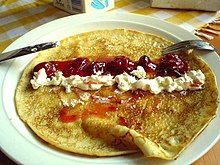 Palatschinke
It comes from Hungary but is very popular in Austria. A thin pancake with apricot jam or vanilla ice-cream.
 Apfelstrudel
Apples in phyllo dough, usually with rasins and almonds.
 Almdudler
Sweetened carbonated soft drink with elderberry herbal extracts. Often mixed with beer or wine.
 Sturm and Most
Seasonal grape drinks, something between grape juice and full-bodied wine. You can barely taste the alcohol but it's usually 4-8%.
 Beer
Beer
Austrian beer is said to be one of the best in the world. Many types, many flavours.
In Polish cities half of the restaurants is vegan and eating sweets is not popular among teenagers and young adults since being 'fit' is fashionable. When I asked locals about their eating habits, they answered: 'Well, we have mountains, we are into sports, so we can eat unhealthy'.
For me eating is always an important part of traveling, so I would like to take a look at traditional Austrian food and drinks.
Despite of the name, there is no cheese. It is a loaf with a piece of meat, usually beef, bacon, and pork cuts ground, mixed and then baked together. Traditional snack after hard working day or during night drinking.
It is a sausage made of blood. People eat it cold or hot, also grilled. You can find versions with chilli, nuts and chocolate.
A fresh apricot in a dough, either a potato or quark-based, covered with bread crumbs and fried in butter. Combination of sweet and savoury.
Pork cuts (shoulder, kidney, and bacon) roasted in a thick brown sauce, served with boiled potatoes. Very popular when it comes to snacks during wine festivals.
People use it not only for frying but also as a spread and eat it with a slice of bread. Schmaltz is usually flavoured with salt, onion and apple. Less popular combinations include tomato, basil, pumpkin.
Even though it's sweet, it could be a main course. Potato dough noodles served with melted butter, ground poppy seeds, and sprinkled with sugar.
A piece of meat (traditional is veal but today chicken and turkey are more popular) served with potato salad and currant jelly. Be careful - it is always huge, you have to be really hungry to eat it.
Popular street food; sausages washed down with beer, served with pommes or bread.
Dark chocolate cake with a layer of apricot jam in the middle, covered in dark chocolate icing. Sometimes with thick whipped cream.
It comes from Hungary but is very popular in Austria. A thin pancake with apricot jam or vanilla ice-cream.
Apples in phyllo dough, usually with rasins and almonds.
Sweetened carbonated soft drink with elderberry herbal extracts. Often mixed with beer or wine.
Seasonal grape drinks, something between grape juice and full-bodied wine. You can barely taste the alcohol but it's usually 4-8%.
Austrian beer is said to be one of the best in the world. Many types, many flavours.
Komentarze
Prześlij komentarz